Small thinker.

It's always easier to solve other people's problems.

Today's noise makes it harder than ever to see your own clearly. And the instinct is to do more — more planning, more options, more complexity — when usually the opposite helps.

I help organizations find the simpler path. The obvious ones that only look clever in hindsight.

Then I stick around until it's actually working.

Let's talk

Mind the execution gap.

Good ideas are a dime a dozen. Choosing the right one and activating it are where most organizations get stuck.

Bridging the gap means diagnosing what's really in the way—how decisions get made, how people work together, where the real friction lives. I stay until it sticks.

Case Studies

What I mean by obvious

Waldorf

A nonprofit couldn't stabilize enrollment no matter how hard they marketed. Every year was a scramble — flyers, ads, school fairs — hoping to win two or three students at a time.

The answer wasn't better marketing. It was changing where students entered. They built an early childhood program upstream. Families came in earlier and stayed. The scramble ended.
Furniture Bank

A social enterprise was ready to scale. The board wanted plans: warehouses, trucks, logistics, capital. Growth meant building more infrastructure.

Except they'd already built the hard part — the backend engine. Call centers, routing, Salesforce, operational know-how. The answer wasn't more buildings. It was licensing what they'd already made. Growth without the capital risk.

"Gord helped us see that scaling wasn't the issue—how we had defined our role was—and that insight saved us from committing to the wrong model." — Dan Kershaw, President and CEO, Furniture Bank
RISE

An organization had momentum and interest in scaling. The conversation kept jumping to models — replication, partnership, new sites.

But they hadn't decided what they were actually trying to scale. Reach? Speed? Brand integrity? The answer was to slow down, clarify the ambition, then pick the model. The path got simpler once they knew where they were going.

"Before we debated models or partnerships, Gord helped us clarify our ambition — and that made every downstream decision easier. Then he helped align the team and board around that ambition." — Jodi Butts, Former CEO, RISE

How I work

Find the Simple Solution Everyone's Missing

Organizations overcomplicate their problems. They're solving for everything at once, optimizing the wrong thing, or missing the obvious move because they're too close to see it.

I help you find the cleanest path from where you are to where you need to be—usually simpler, smaller, and closer than you think.

I don't bring you 47 priorities. I help you see the one that matters most right now.

Surface What's Really Blocking Progress

The real barriers are rarely in the strategic plan. They're in unspoken conflicts, misaligned incentives, founder blind spots, or board dynamics everyone tiptoes around.

I build the trust that lets us name and solve the actual problem—first.

Why it matters: Progress happens at the speed of safety. Some consultants take months to earn trust. Some never try. I get there in the first meeting because people can tell when someone respects their intelligence and isn't trying to sell them something.

That's not a soft skill. It's diagnostic efficiency. When people tell you the truth early, you solve the right problem sooner and with the right energy.

Embed Until It Runs Without Me

Change fails at the handoff. You've seen it: the consultant leaves, the binder sits on a shelf, everyone defaults to the old way within three months.

I work alongside you—in your meetings, on your documents, editing live—until the new approach becomes muscle memory for your team.

My job is to make myself unnecessary.

Who This Is For

Purpose-driven organizations at an inflection point.

The informal ways of working that felt nimble now create bottlenecks. Decisions that used to happen in one conversation now require alignment across teams. What sustained you is starting to constrain you.

Typical clients: Nonprofits scaling impact. Social enterprises navigating growth. Mission-driven businesses with teams of 15–150 people.

You know what needs to happen. You might even have a plan. But somewhere between intention and execution, things break down—not because people aren't trying, but because the structures, decision-making, and systems that worked when you were smaller don't anymore.

If that sounds familiar, let's talk.

About Gordon

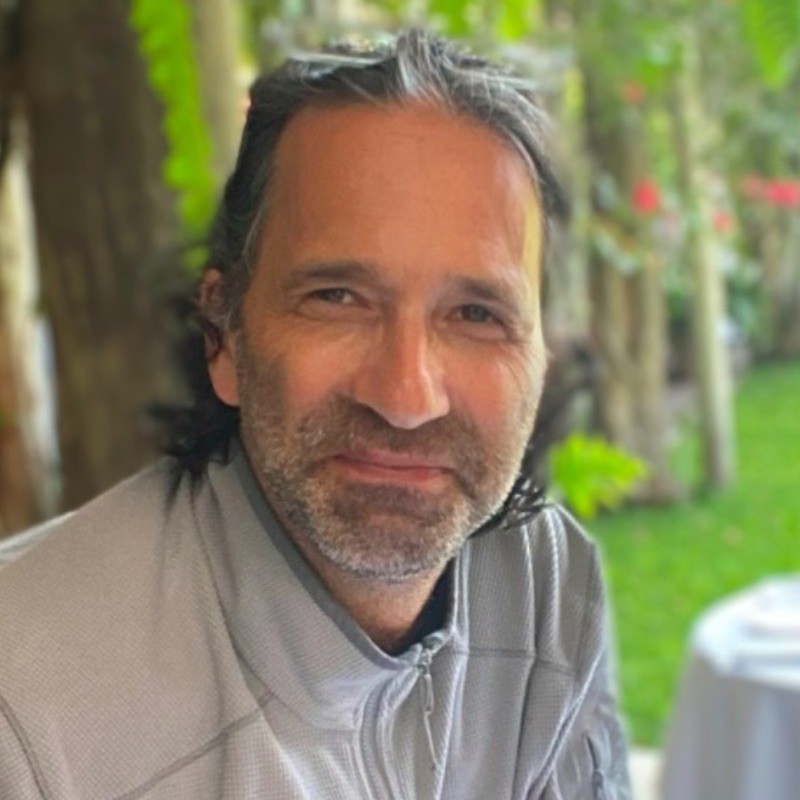
Gordon Goldschleger, strategy and operations consultant

I've been in your seat. I started in manufacturing operations, where you learn that elegant solutions ship and complicated ones don't. Then I led nonprofits through growth, instability, and reinvention. Then I spent years in management consulting, seeing patterns across dozens of organizations. That path taught me what works in a boardroom and the many reasons things break on the front line.

I speak multiple languages. I know how a CEO hears "impact," how a funder reads "strategy," what a front-line team needs to believe, and how a board thinks about risk. Most consultants are fluent in one world. I translate between them. And I optimize for what will actually get done — by these specific people, in this specific context, with these specific constraints. Not what looks good in the deck.

Client Testimonial

"When I'm on a call with Gord, I find myself talking through the things I'm actually wrestling with — not the polished version. He asks the question that helps me see what I'm really trying to solve."
— Maureen Haan, CEO, Canadian Council on Rehabilitation and Work

Let's talk.

The best way to start is a conversation. No pitch, no pressure — just a chance to see if I can help.

Email me